
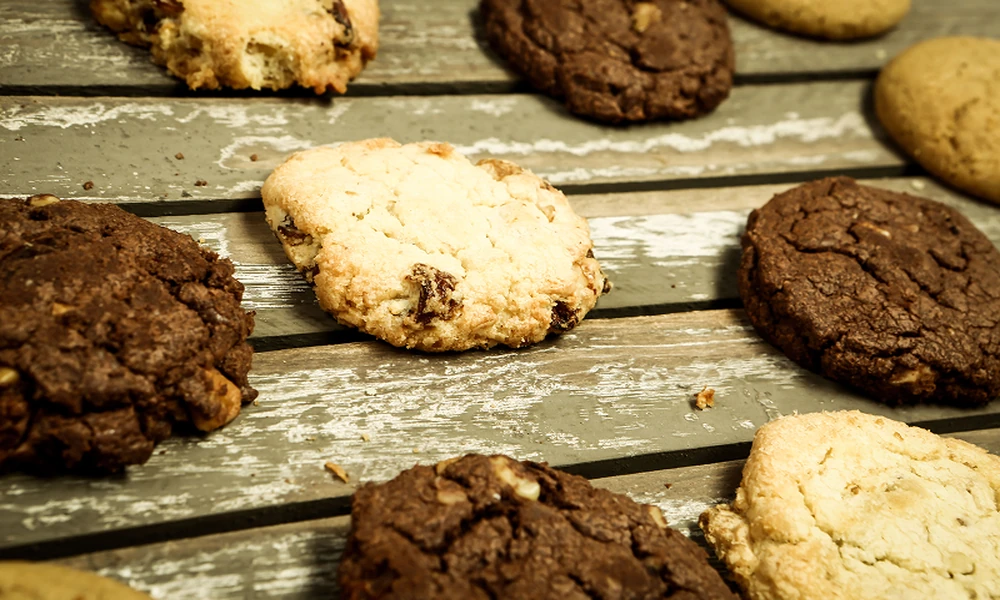
Cookie texture is determined by the interaction between ingredients and the physical changes that occur during mixing and baking. Flour, fat, sugar, eggs and moisture establish the basic structure, while additions such as nuts, chocolate and fillings introduce further variations.
These additions can create crunch, soft pockets or contrasting centres without necessarily changing the entire cookie in the same way. Understanding these effects can also help explain the differences consumers encounter when comparing the best chocolate chip cookies in Singapore and other cookie styles.
How Do Nuts Change the Texture of Cookies?
Nuts mainly introduce a firm, crunchy element to cookie dough. Almonds, walnuts, pecans, hazelnuts and other nuts retain more structure during baking than the surrounding dough, creating noticeable differences between each bite.
The way nuts are prepared also affects their contribution to texture:
- Whole or large pieces: Create pronounced areas of crunch and can make the cookie feel more substantial.
- Roughly chopped nuts: Distribute smaller crunchy pieces throughout the cookie.
- Finely chopped nuts: Produce a more consistent texture because the pieces are spread more evenly.
- Ground nuts: Behave differently from larger pieces and can contribute fat while altering the structure of the dough, depending on the recipe.
- Toasted nuts: Lose some moisture during heating and generally develop a crisper texture.
Nut distribution matters as well. Large clusters can cause certain areas to break differently from sections consisting mainly of baked dough.
Overall, nuts primarily create firmness and textural contrast. Their size, preparation and distribution determine how noticeable that contrast becomes.
How Does Chocolate Affect a Cookie’s Texture?
Chocolate behaves differently from nuts because it softens or melts when heated. Once the cookie cools, the chocolate firms again, although its final texture depends on its composition and form.
Chocolate chips and chunks can produce noticeably different results. Chips are designed to retain their shape relatively well during baking, while chopped chocolate can produce irregular pockets and thin streaks of melted chocolate.
Several forms of chocolate may influence texture differently:
- Chocolate chips: Create relatively consistent pieces throughout the cookie.
- Chocolate chunks: Form larger and less uniform pockets of chocolate.
- Chopped chocolate: Produces pieces of different sizes, potentially creating a mixture of small flecks and larger areas.
- Cocoa powder: Becomes part of the dough rather than forming separate pockets, so it affects the cookie differently from solid chocolate pieces.
The amount and distribution of chocolate therefore influence the experience of each bite. That said, when comparing products described as the best cookies in Singapore, differences in chocolate format can be just as relevant to texture as the basic cookie recipe.
In summary, chocolate can provide both solid and softer textural elements depending on temperature, size and formulation.
How Do Fillings Change the Texture of Cookies?
Filled cookies add another structural element because the centre may behave differently from the surrounding dough. Common examples include chocolate-based centres, caramel and nut-based spreads.
A filling can affect texture in several ways:
- Soft centres create a contrast with firmer baked edges.
- Thick fillings can remain concentrated in the middle rather than spreading throughout the dough.
- Meltable fillings may become softer during heating before thickening again as the cookie cools.
- Moist fillings can influence the perceived softness around the centre of the cookie.
Filled cookies also require the dough to surround and contain the centre during baking. The thickness of the dough, quantity of filling and baking conditions therefore influence whether the exterior sets while the interior retains its intended consistency.
This creates a different textural structure from a conventional chocolate chip cookie. Rather than distributing every addition throughout the dough, filled cookies deliberately concentrate part of the texture in the centre.
How Do Ingredients Affect a Cookie’s Overall Texture?
Nuts, chocolate and fillings are only part of the equation. The underlying dough determines whether the finished cookie begins with a soft, chewy, crisp or crumbly structure.
Several fundamental factors influence that base:
- Flour supplies proteins and starches that contribute to structure.
- Sugar affects sweetness, moisture retention, browning and spread.
- Fat contributes tenderness and influences how the dough spreads.
- Eggs provide moisture and proteins that help establish structure.
- Baking time and temperature affect moisture loss and how firmly the cookie sets.
Added ingredients then create layers of texture within that foundation. Nuts may add crunch, chocolate can create firm or softened pockets, and fillings can introduce a contrasting centre.
Due to this, identifying the best chocolate chip cookies based on texture alone depends partly on individual preferences for crispness, chewiness and ingredient contrast. There is no single texture that defines a correctly made cookie; different recipes are designed to produce different results.
Visit Nasty Cookie to explore different cookie styles and discover the texture that makes every bite worth savouring.