
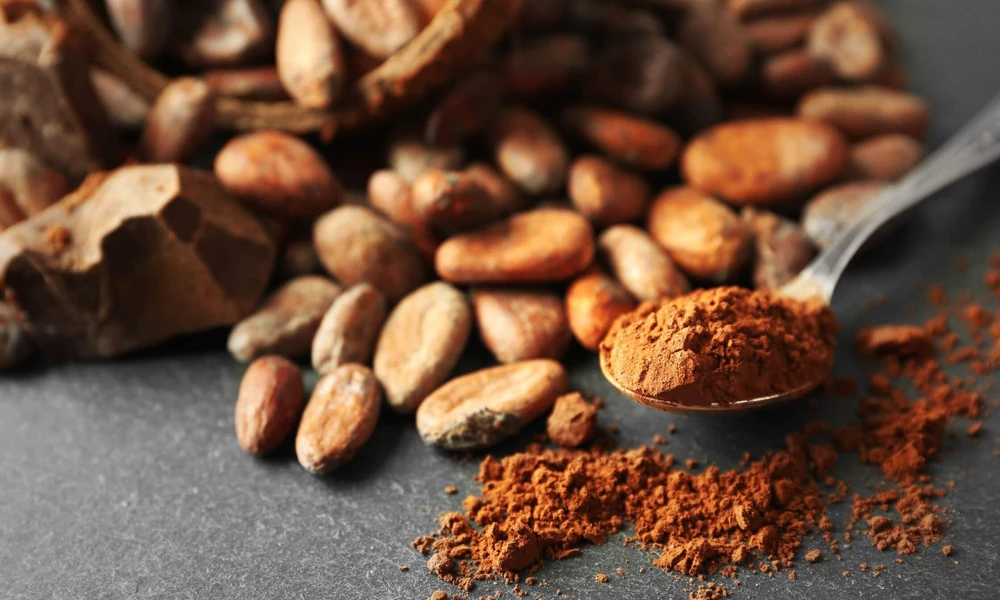
A spoonful of cacao powder may seem too small to count when you are fasting. It is unsweetened, mixes into water, and can look more like a flavouring than food. Nevertheless, it supplies calories. If your fasting rule is no calorie intake, cacao powder breaks that fast. Reading the label helps you understand the amount you are consuming without getting distracted by claims on the front of the package.
Start with the serving size
The nutrition panel describes a particular quantity of powder. Check that quantity before looking at the calorie figure. If you use twice the labelled serving, you need to account for twice the listed energy. A heaped kitchen spoon is also less precise than a measured amount, which matters when you are trying to compare recipes consistently.
For a concrete example, Hershey’s natural unsweetened cocoa lists calories even though it is made with 100 percent cacao. Other products have their own serving sizes and nutrition values, so use the label on your container. The practical point is simple: unsweetened describes the absence of added sweetening, not the absence of food energy.
Also distinguish plain powder from a hot chocolate mix. Products displayed beside one another may contain very different ingredients. Sugar, milk powder, and other additions affect what goes into your cup. Read the back of the package even when words such as natural or cacao appear prominently on the front.
Account for the complete recipe
The question will cacao powder break a fast often comes up when people add a small amount to coffee or hot water. Mixing powder into a drink does not change whether it contains calories. Adding milk, cream, honey, or oil introduces more ingredients to count. Write down the recipe once if you make the same drink regularly.
For time-restricted eating, Johns Hopkins Medicine describes water and zero-calorie drinks such as plain tea or black coffee during fasting periods. Cacao powder is a different addition because you consume the powder itself. A drink can contain relatively few calories and still fall outside a rule that excludes calorie intake.
Decide when to enjoy it
Moving cacao powder into your eating window is often the clearest solution. You might stir it into porridge, blend it into a smoothie, or make a warm drink with a meal. Choose the version you enjoy and account for its ingredients as you would with other food. There is no need to pretend a favourite ingredient has no calories to keep it in your routine.
If you have already had a cacao drink, record when you consumed it and continue with your planned meals. There is no need to compensate by imposing a longer fast. Keep medical instructions separate from lifestyle preferences: if you are fasting for a test or procedure, follow the directions from your healthcare team. For an ordinary eating schedule, a clear rule and an accurate label reading make the decision straightforward.