
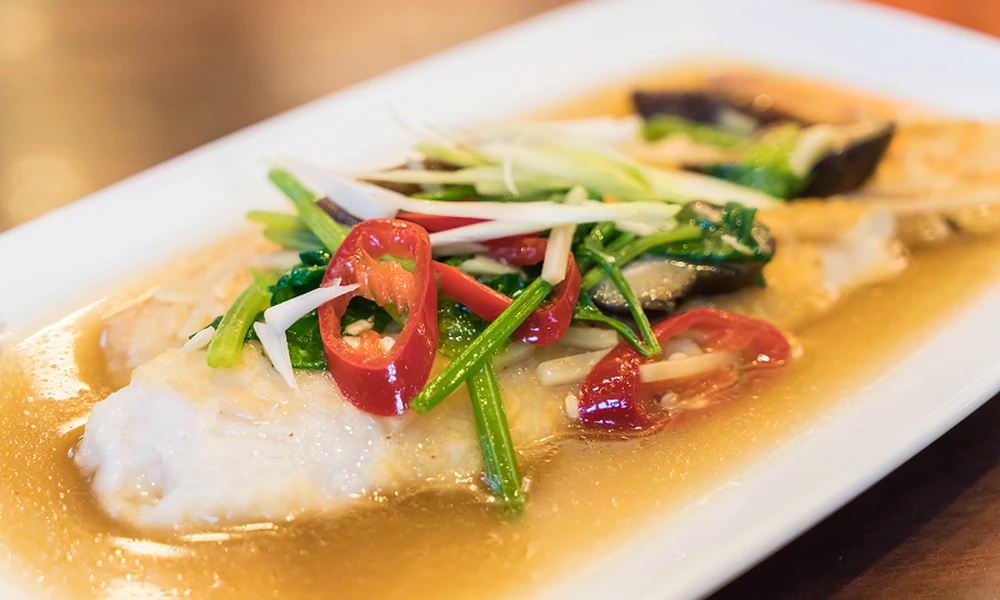
Steaming is one of the gentlest ways to cook fish, keeping the flesh moist and the flavour clean. It is also easy to get wrong. A minute too short leaves the centre translucent, while a minute too long turns delicate flesh dry and rubbery. Whether you are following a healthy steamed fish recipe for a weeknight dinner or steaming a whole fish for a family meal, knowing the signs of doneness helps you take the fish off the heat at the right moment.
Signs That Steamed Fish Is Done
Rather than relying on time alone, it helps to check the fish itself. Several signs, used together, give a reliable picture of whether it is ready.
The Flesh Turns Opaque
Raw fish looks glossy and slightly translucent. As it cooks, the flesh turns opaque and white or pale, depending on the species. Check the thickest part, as the thinner edges will cook first and can look done while the centre is still raw.
The Flesh Flakes Easily
Gently press the thickest part with a fork or chopstick. Cooked fish separates into flakes with little resistance. If the flesh still feels firm and springs back, or the flakes cling together tightly, it needs a little more time.
The Flesh Comes Away From the Bone
For whole fish, insert a chopstick or knife at the thickest point near the backbone. When the fish is cooked, the flesh lifts away from the bone easily and shows no pink or translucent patches. The eyes of a whole fish also usually turn white and slightly raised.
The Internal Temperature Reaches 63°C
A food thermometer gives the most precise reading. Food safety guidelines commonly recommend cooking fish to an internal temperature of 63°C (145°F), measured at the thickest part. Insert the probe sideways into the centre of the flesh, avoiding the bone, which can give a higher reading.
Timing as a Starting Point
Steaming time depends mainly on the thickness of the fish rather than its weight. As a rough guide, a threadfin fillet about 2 cm thick may take around 6 to 8 minutes over rapidly boiling water, while a whole fish of around 600 g may need 10 to 12 minutes. These times can vary with the strength of the heat, the size of the steamer and how cold the fish was before cooking, so it helps to check the fish a minute or two before the expected time. Thicker cuts, such as fish steaks or large fillets, will need longer, so base the timing on the thickest point.
Avoiding Overcooking
Once you know what to look for, a few simple habits can help keep steamed fish tender and moist:
- Bring the water to a full boil before placing the fish in the steamer, so cooking starts evenly.
- Let the fish sit at room temperature for 10 to 15 minutes before steaming, so the centre is not too cold.
- Keep the lid closed during steaming, as opening it lets heat escape and lengthens cooking time.
- Steam fillets of similar thickness together, or add thinner pieces later.
- Place the fish on a shallow plate raised above the water, so steam can circulate freely.
- Remove the fish just as it turns opaque at the centre, as it will continue cooking slightly from residual heat.
- Use a timer rather than estimating, especially when preparing several dishes at once.
- Pour off excess liquid from the plate before adding sauce, as it can dilute the flavour.
If the fish turns out slightly underdone, it can go back into the steamer for another minute, but overcooked fish cannot be rescued.
Reading the Fish, Not Just the Clock
Steamed fish is ready when the flesh turns opaque, flakes easily and lifts cleanly from the bone, or when it reaches 63°C at the thickest point. Using timing as a guide while checking these signs, and taking the fish off the heat as soon as it is done, helps keep every serving moist and tender.
Planning a steamed fish dinner tonight? Contact Catch of the Day and shop our threadfin fillets online for delivery to your door.